
Rev. James Forsyth of Airth & Tailzertoune (d. 1675)
/
Among the 17th-century Forsyths whose lives intersected faith, heraldry, and family legacy, Rev. James Forsyth stands out as a figure of both gentleness and importance. His life is preserved through historical writings, burgh records, and Scotland’s Public Register of Arms — allowing us to reconstruct a rich portrait of this early clergyman
Airth Minister and Choice of the Town Council (1665)
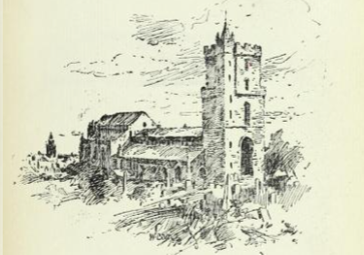
James Forsyth was serving as minister at Airth when the Town Council of Stirling selected him to succeed Matthias Simpson as minister of Stirling. Their choice was confirmed when he was presented to the charge by the Archbishop of St Andrews on 31 March 1665.
James Ronald’s Landmarks of Old Stirling describes him simply and warmly as:
“a quiet, inoffensive man, and his memory is fragrant.”
– Landmarks of Old Stirling, p. 328
He served faithfully until his death in November 1675, leaving a charitable bequest of £100 Scots “laid by in a purse” for the poor of Stirling.
A Recorded Coat of Arms (1672): Forsyth of Tailzertoune
In 1672, when Scotland established its formal heraldic register, James Forsyth entered his arms as:
“Mr. James Forsyth of Tailzertoune, minister of Stirling, a descendant of the Family of Dykes commonly designed Hallhill.”
— Public Register of All Arms & Bearings in Scotland, Vol. I, No. 947
His Arms (Heraldic Description)
Shield: Argent, a chevron engrailed gules between three griffins segreant vert, armed and membered gules.
Crest: A demi-griffin vert.
Motto: Instaurator Ruinae — Restorer of the Ruins.
These arms, though recorded as Dykes-descended, visually resemble the heraldry traditionally associated with the Forsyths of Nydie, an interesting point for heraldic scholars.
Marriage and the Passing of His Estate
James married Marion Elphinstone, but the couple had no children. Upon his death, his estate passed to his nephew:
James Bruce → James Forsyth
Nephew of Marion Elphinstone
Required by inheritance terms to adopt the Forsyth surname
Appears in records as James of Garvell, alias James Forsyth
A later document refers to Rebecca Forsyth alias Bruce, confirming the continuation of this line under the Forsyth name.
Why James Forsyth Matters to Clan History
Rev. James Forsyth embodies several threads important to Forsyth heritage:
Ecclesiastical service during a turbulent period in Scotland
Heraldic identity tied to two major Forsyth lines
A surname-continuation inheritance, revealing how Forsyth lines sometimes extended through marriage
A reputation for gentleness and charity, preserved for centuries
Taken together, his story enriches our understanding of Forsyth presence in Stirlingshire and the broader landscape of 17th-century Scotland.
Sources
James Ronald, Landmarks of Old Stirling (Edinburgh: Eneas Mackay, 1928), 328.
Public Register of All Arms and Bearings in Scotland, Vol. I, No. 947 (1672).
R. R. Stodart, Scottish Arms (Edinburgh: W. Paterson, 1881), vol. 2, p. 298.
Inquisitionum Ad Capellam Domini Regis Retornatarum, (various locations referencing James Bruce / Forsyth).